20 May 2026
In France, over 10 million people live with chronic respiratory diseases. Despite the scale of the challenge and its growing economic burden, respiratory health has historically been fragmented across public policies, with no dedicated national strategy to bring it together.
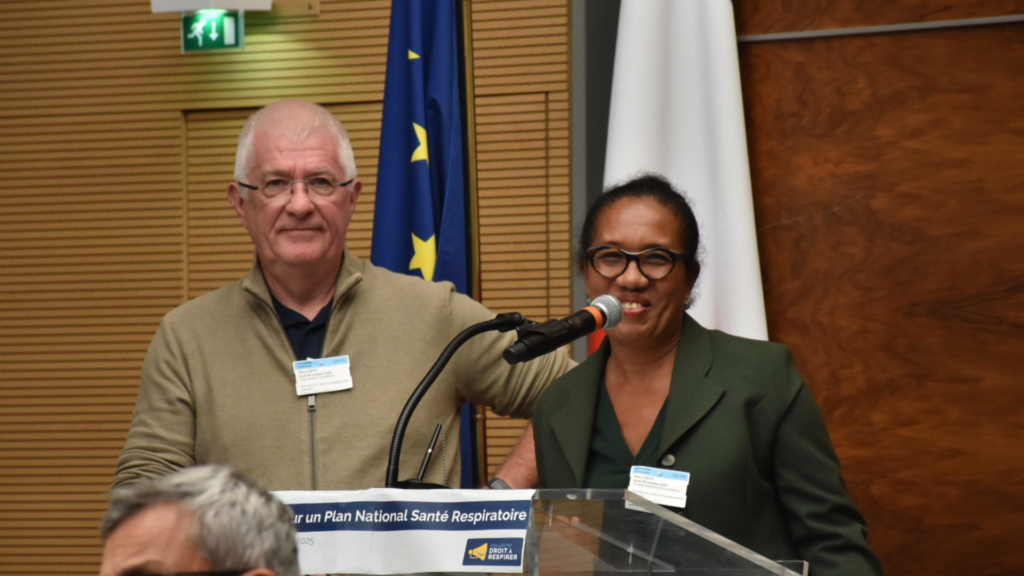
That is what Collectif Droit à Respirer (the “Right to Breathe Collective”) has set out to change with support from the International Respiratory Coalition.
Growing a collective for a unified approach to respiratory health
When France’s coalition first formed in 2021, its founding members shared a common frustration: respiratory health was not being treated as a public health priority. Prevention policies were insufficient. Diagnosis often came too late, care pathways were fragmented, and there was no long-term strategic vision to address these issues.
Patient organisations, healthcare professionals and civil society groups all had pieces of the puzzle, but no mechanism to work collectively. The early years focused on building that foundation: recruiting members, establishing a shared agenda, and determining how to translate collective concern into collective action. One of the coalition’s early priorities was to ensure genuine parity between patient organisations and professional associations. Bringing these groups together as real partners took effort and careful relationship-building.
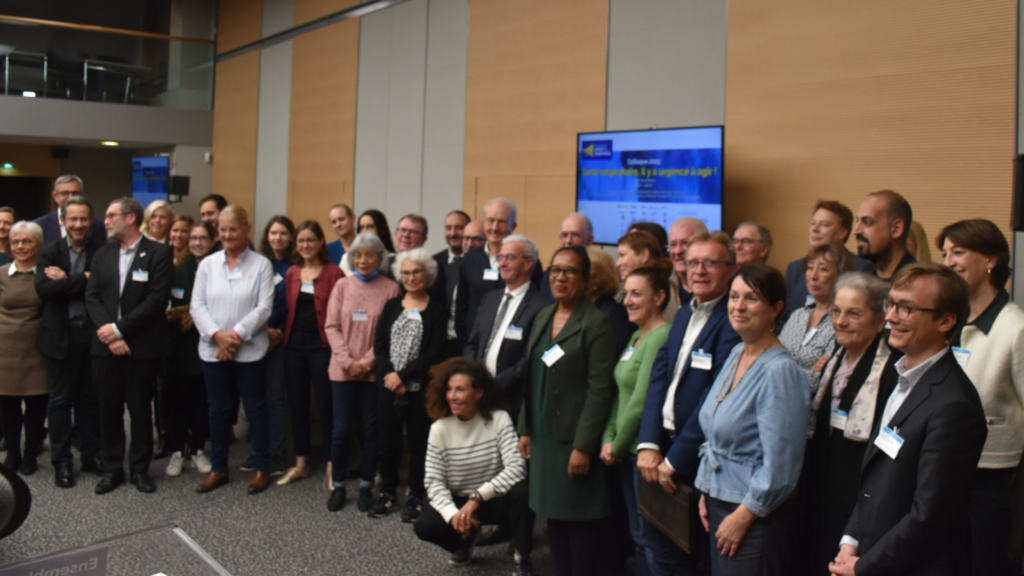
By 2024, the coalition had grown to 28 member organisations and taken a decisive step: formally structuring as a non-profit organisation under French law. This gave the group a legal identity, clearer governance, and the ability to act as a unified voice in policy discussions. Alongside this, the coalition has built an active network of parliamentarians — members of the National Assembly who have committed to working with the coalition to advance respiratory health ambitions.
But structure alone was not enough. The coalition needed credibility, and that meant evidence.
Building the evidence base for advocacy
The coalition’s first key breakthrough came with the creation of the Respiratory Health Observatory, launched in February 2023 at the French National Assembly under the patronage of the Minister of Health and Prevention. The concept was straightforward but powerful: systematically track and assess government action on respiratory health, and do it publicly.
The observatory is organised around six thematic pillars covering the full spectrum of respiratory health challenges:
- Reducing environmental and behavioural risk factors
- Raising public awareness
- Improving screening and early detection
- Recognising respiratory disability and tackling social exclusion
- Developing health pathways for all patients
- Accelerating research and access to innovation
Each year, coalition members collectively rate government policies using a traffic-light system, from “very insufficient” (red) to “highly impactful” (green). The assessments are published on the coalition website, creating an annual accountability mechanism.
The observatory provides the evidence base that underpins both the national plan and the coalition’s advocacy work. It allows them to track progress over time, identify gaps, and anchor political discussions in objective data.
Now in its third edition, the observatory has become the backbone of the coalition’s strategy. Its findings have been sobering: overall, government action on respiratory health has shown a general decline.
External validation from France’s Court of Auditors
In May 2024, the coalition’s work received powerful validation. The Cour des comptes (French Court of Auditors), an independent body that advises the government on public spending, published a major report on respiratory health.
Its conclusion: France needed a national respiratory plan coordinated with environmental health policy. Having an independent institution like the Court of Auditors reach the same conclusions the coalition had been advocating for has given their work further credibility.
Several measures the coalition had been advocating for appear directly in the report’s recommendations:
- Including respiratory health in the National Health Strategy and National Environmental Health Plan
- Developing a roadmap for chronic respiratory diseases
- Implementing individual prevention strategies
- Funding better access to adapted physical activity for patients
- Promoting screening through self-questionnaires
- Supporting digital devices for patient autonomy
The report also highlighted something the coalition had long argued: the economic case for prevention. With healthcare expenditures for respiratory conditions rising sharply, investing in prevention is not just good health policy; it is fiscally prudent.
From evidence to planning: 17 proposals for change
Building on the observatory data and the Court of Auditors report, the coalition developed its most ambitious project yet: a National Respiratory Health Plan designed as a multi-year roadmap for 2026 to 2030.
The plan will contain concrete policy proposals organised around four axes, each directly linked to an identified policy gap, ensuring the plan is grounded in evidence rather than aspiration:
- Axis 1: Prevention and early detection
- Axis 2: Coordinated care pathways
- Axis 3: Recognising respiratory disability
Axis 4: Clear governance
With several critical proposals on the table, the coalition knows that prioritisation will be essential. Not everything can happen at once, and political windows are limited. They have launched a structured prioritisation process using the Delphi method, consulting coalition members through iterative rounds to build consensus on which measures to advance first. The goal is to align proposals with political priorities, operational constraints, and realistic implementation timelines.
The timing is significant. France’s presidential election cycle is approaching, and the coalition is positioning the National Respiratory Health Plan as a reference document for candidates and policymakers. The strategy is to ensure respiratory health is on the agenda before the political window closes.
Lessons for IRC national coalitions
When asked what advice they would offer to other national coalitions, the French team emphasises several principles:
- Structure matters. Formalising as a non-profit created accountability, enabled governance, and made the coalition a legitimate interlocutor for policymakers.
- Start with evidence. The observatory gave them credibility and a shared reference point. Without data, advocacy becomes opinion.
- Think long-term, act incrementally. The national plan is a 2026 to 2030 roadmap, but the coalition has been building toward it since 2021.
- Seize external opportunities. The Court of Auditors report was not something they anticipated or controlled, but they were ready to capitalise on it because they had already done the groundwork.
- Keep the coalition engaged. All 28 member organisations participate in rating the observatory and providing input on the national plan. Collective input is essential.
The coalition also plans to translate the observatory into English, making its methodology available to the wider IRC network. It is an approach they believe others can adapt.