
24 September 2026
The scale and burden of lung disease across the WHO European region is striking. The latest analysis from the International Respiratory Coalition (IRC)’s Lung Facts shows there were around 97 million cases of respiratory disease and 1.2 million early deaths from lung disease in the region in 2023, with the societal cost of this burden estimated at €795 billion annually.
Chronic lung diseases asthma and COPD were among the most common conditions, with an estimated 56 million and 38 million cases respectively. Lung cancer accounted for more than a third of all respiratory disease deaths (495,000), followed by COPD (332,400) and lower respiratory infections (277,500). Behind these statistics are real people facing challenges like delayed diagnoses, difficulty accessing appropriate care, and living with a condition that could have ultimately been prevented.
The European Commission is preparing to open its first EU Screening Week from 28 September to 2 October, focusing on promoting three heart health tests aligning with the Safe Hearts Plan – blood pressure, cholesterol and blood sugar. As a statement from the European Respiratory Society (ERS) and European Lung Foundation (ELF) makes clear, healthy lungs and healthy hearts are closely connected.
Many risk factors that affect cardiovascular health, such as smoking, air pollution and physical inactivity, also affect the lungs. The statement highlights research showing that:
- low lung function is a predictor of heart disease, stroke and premature death, independent of other risk factors
- spirometry – a simple lung function test – can flag future problems like heart failure and atrial fibrillation before they develop
- respiratory disease is underdiagnosed in people with cardiovascular disease, because shared symptoms like breathlessness may be misclassified as linked only to cardiac disease
Across Europe, progress on lung health testing is lagging. Lung cancer screening is slowly gaining ground, but it remains far from universal. Only a handful of countries, including Croatia, Czechia, France, Germany, Poland and the United Kingdom, are planning or have rolled out funded national screening programmes. Other countries offer screening in some areas but not others, while many nations are still running regional pilots or clinical trials rather than committing to nationwide coverage.
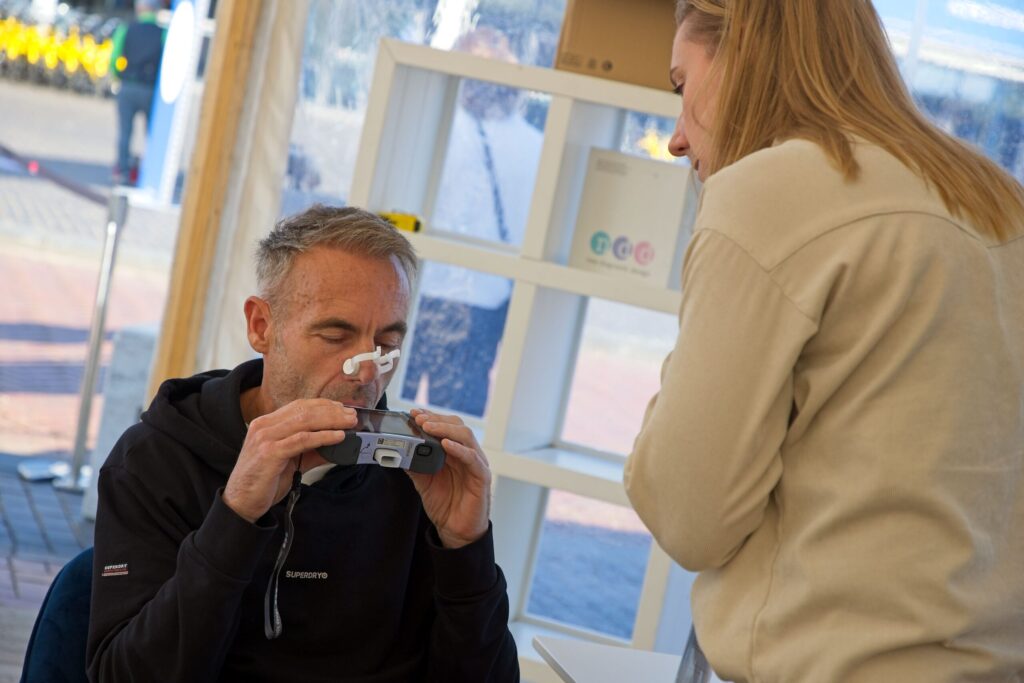
A person completing a spirometry test at a Healthy Lungs for Life public event. It is a simple, noninvasive lung function test to see how much air a person can force out of their lungs.
These gaps are why the respiratory community is mobilising, organising lung testing events to put respiratory health on the EU’s screening map. Adding lung testing to routine heart health checks could help address these challenges while delivering huge benefits for the management and treatment of both lung and heart disease.
Routine testing increases the chance of catching diseases early. This can lead to improved prevention strategies and treatment outcomes and reduce the need for more invasive and intensive treatments, which is far more preferable for patients and reduces the financial and capacity burden on stretched healthcare services.
For people invited to attend a health check, combining tests into a single appointment simply makes life easier – fewer letters, fewer hospital visits, and less time spent waiting for results. It could ease the anxiety that puts some off attending in the first place, making the experience feel less daunting and helping more people to feel confident about attending health checks.
Routine testing also creates a direct route for people who are at higher risk of lung and heart disease, such as older people, those with a smoking history, and people already living with a chronic disease, to engage with local healthcare services and learn about the simple things we can do to keep our lungs and heart healthy.
And the economic case is hard to ignore. Treating advanced disease is slower, harder and more expensive than catching it early. This burden falls not just on health systems, but on patients, their families and loved ones, employers and society at large, through lost working years, disability and premature death. Investing in early detection and prevention means healthier and more independent populations later in life.
With so many clear benefits for patients, local healthcare services and health systems alike, the European Commission should heed our community’s calls to combine targeted lung and heart health checks for at-risk groups, so we can catch disease earlier and keep more people healthier for longer.